


/file/publisher-c1a3f893382d2b2f8a9aa22a654d9c97/2026/03/bc1338d7115e16563952f5addf228b55.jpg)

COMMENT | Drink-driving: Take the car, sell it, and give money to the widow
On the morning of March 29, the 33-year-old warehouse worker and part-time delivery rider left home just after 10am. He had been meaning to buy a Maths workbook for his nine-year-old for several days.
His last message to his wife, Nor Nadia Abdul Majid, was about diapers that had arrived. Six minutes later, she got a call from a police officer. At first, she thought it was a scam. Then the caller mentioned her husband's name.
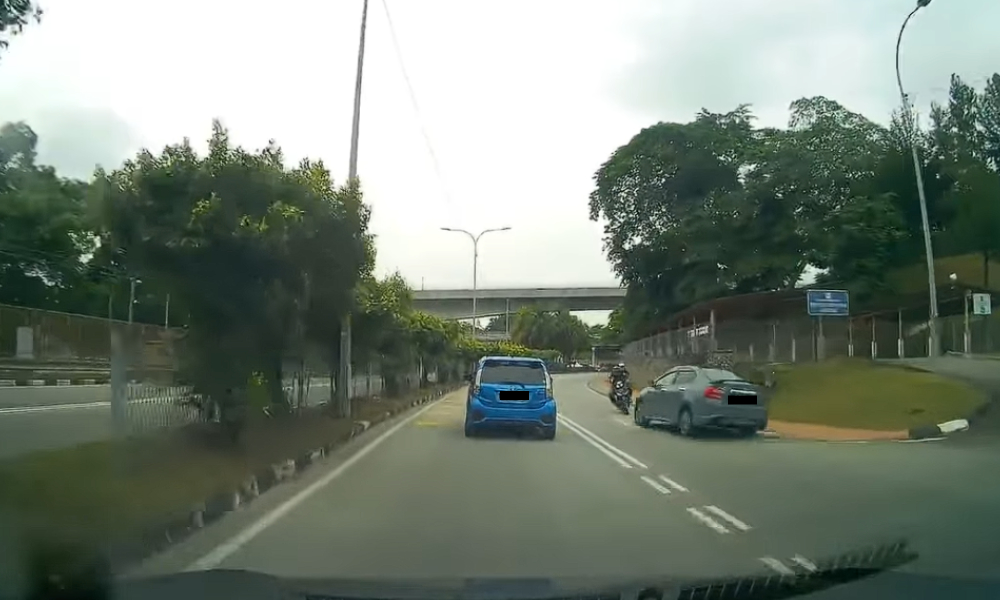
At 11.40am on Jalan Raya Barat, Klang, a Honda City - driven by a man in his 20s who tested positive for both alcohol and drugs - overtook several vehicles on a double line at high speed, crossed into oncoming traffic, and hit Amirul's motorcycle head-on.
The impact threw him onto the...
COMMENT | Amirul Hafiz Omar counted his money ringgit by ringgit. His mother watched him do it. He told her it was for the children's schooling.
On the morning of March 29, the 33-year-old warehouse worker and part-time delivery rider left home just after 10am. He had been meaning to buy a Maths workbook for his nine-year-old for several days.
His last message to his wife, Nor Nadia Abdul Majid, was about diapers that had arrived. Six minutes later, she got a call from a police officer. At first, she thought it was a scam. Then the caller mentioned her husband's name.
At 11.40am on Jalan Raya Barat, Klang, a Honda City - driven by a man in his 20s who tested positive for both alcohol and drugs - overtook several vehicles on a double line at high speed, crossed into oncoming traffic, and hit Amirul's motorcycle head-on.
The impact threw him onto the roof of a passing Perodua Myvi. He was pronounced dead at the scene.
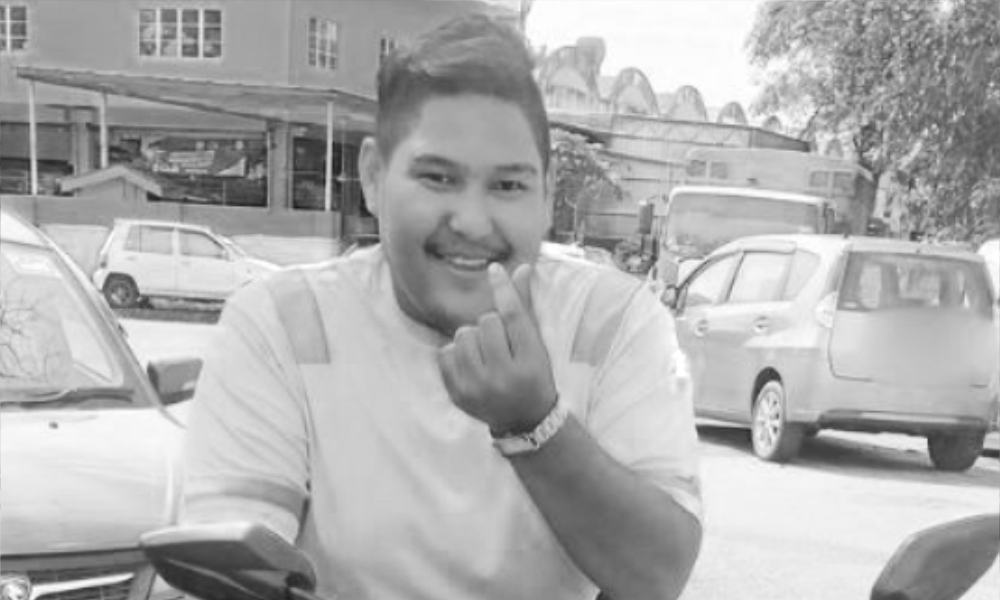
He leaves behind Nor Nadia, 32, and three children: Aqif Amsyar, nine, Afif Izz Rayqal, seven, and Nur Humaira, two.
The youngest is two. She will not remember Amirul’s face.
The ritual we know by heart
If you have been following local road safety news for more than 15 minutes, you already know what happens next.
Politicians issue statements. Ministers express grave concern. NGOs demand maximum sentencing.
Someone proposes the death penalty. Someone else counter-proposes “diyat” (blood money). The hashtag trends for 48 hours. Then it fades, and we wait for the next Amirul.
This time, Transport Minister Anthony Loke said his team is drafting amendments to the Road Transport Act 1987 to compel those driving under the influence (DUI) to compensate victims' families.
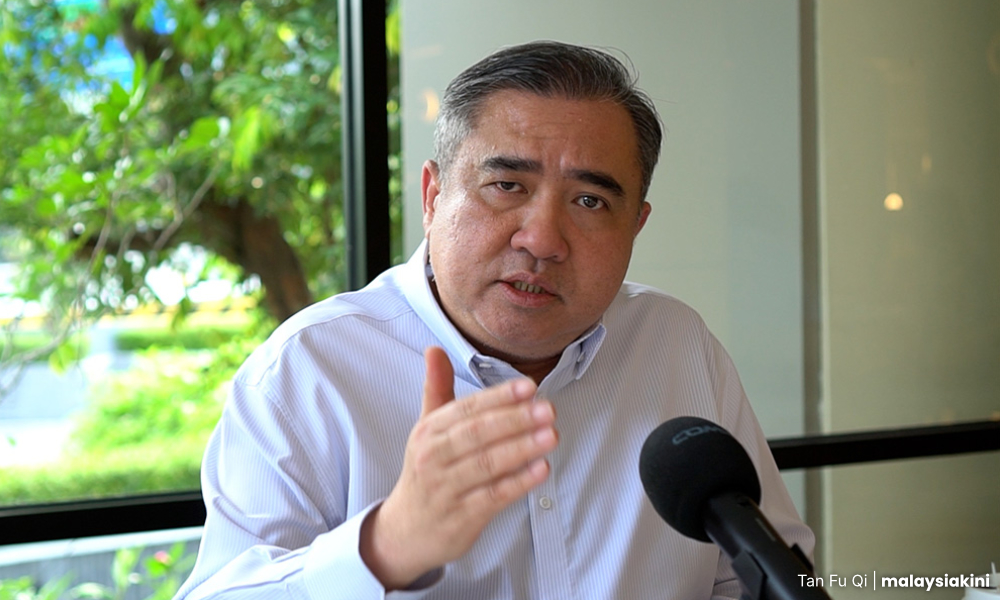
That is a welcome instinct. Opposition MP Khairil Nizam Khirudin was more blunt: "Loke, do something."
Machang MP Wan Ahmad Fayhsal Wan Ahmad Kamal went further and called for the death penalty, describing drink-driving as "extreme negligence that should be considered a serious crime against society."
Fair enough. Everyone has something to say.
Never mind that Loke in Parliament last year had quoted police data on road deaths involving DUI - that it recorded 0.5 percent of overall road deaths since 2022.
Never mind that a study by the Malaysian Institute of Road Safety Research (Miros) in 2012, with data gathering from public hospitals in Klang Valley recorded that 23 percent road fatalities were found positive for alcohol in the deceased's body system.
No one has a plan
What nobody in Putrajaya apparently has, however, is a plan. Not a working paper. Not a short, medium and long-term DUI road safety roadmap. Not a structured, phased, evidence-based policy framework. Nothing.
The Road Transport Act 1987 - note the year - remains Malaysia's primary legal instrument against drunk drivers and drug-impaired driving.
While Amirul was counting coins for his children's schoolbooks, Putrajaya is still counting on a law drafted before the government’s email existed.
There is, to be charitable, a cabinet-level Congestion and Road Safety Committee chaired by the deputy prime minister.
It has existed for approximately three years. Its contribution to meaningful DUI reform is, at this point, classified - presumably because it does not exist.
Perhaps the minutes are riveting. Perhaps, the PowerPoint slides are gorgeous. But Amirul is still dead, and the Honda City is presumably still parked somewhere, still intact, perfectly legal, waiting to be returned to its owner.
About that car
Here is a thought that has apparently not crossed anyone's mind in Putrajaya.
Take the car. Auction it. Give the money to Nor Nadia. Not as a gesture. As a law.
The idea is called vehicle confiscation and forfeiture for DUI - and before anyone reaches for the word "radical”, consider this: Malaysia already does it.
Section 80 of the Land Public Transport Act 2010 empowers the Road Transport Department (RTD) to seize and permanently forfeit commercial vehicles for serious violations such as overloaded lorries, rogue buses, and unlicensed operators.
In 2025, RTD seized 465 commercial vehicles under this exact provision, an 85.2 percent increase over the year before. The impound facilities exist. The legal machinery works. RTD knows how to auction a seized vehicle and bank the proceeds.
Malaysia confiscates lorries for carrying too much cement and sand. It cannot, apparently, confiscate the car that killed a father on his way to buy a Maths workbook.
This is not a legal impossibility. It is a policy choice. And it is the wrong one.
Sell the vehicle
The proposal is simple: insert a new clause under the Road Transport Act. Vehicles used in repeat DUI offences, in commercial vehicle DUI, or in any DUI causing death or serious injury - confiscated upon conviction. Title stripped. Publicly auctioned.
Fifty percent of the proceeds should go to a DUI Victim Compensation Fund for direct support to families like Nor Nadia's, and the rest goes to a Road Safety Trust Fund for communications campaign, enforcement and education.
If implemented, this would be the first such law in Asia. Which says something rather unflattering about Asia - but that is a different story.
Latvia did it. Belarus did it. Both countries are smaller than Selangor.
Latvia introduced vehicle confiscation for DUI in 2022. Within three years, more than 2,000 vehicles had been seized - Volkswagens, Audis, BMWs, and, most satisfyingly, a Ferrari that fetched €176,000 (RM818,196) at public auction.
Latvia's state police formally confirmed a measurable deterrent effect: impaired driving incidents fell in direct proportion to the number of confiscations.
The programme has been so successful that Latvia now donates some of the seized, roadworthy vehicles to Ukraine. Drink-driving in Latvia has found a humanitarian silver lining.
Belarus moved even earlier, in 2013. Any second DUI offence within 12 months triggers mandatory confiscation - and ownership is legally irrelevant.
Driving someone else's car drunk? The car goes. The first case under the new law was resolved within weeks: a man caught twice in two months lost the vehicle he was driving even though it belonged to someone else.
The court was not interested in whose name was on the registration. The vehicle had been used as a “weapon”, and it was taken.
The combined message from both countries is identical: a fine, you can budget for. A prison sentence, you can eventually walk out of. But losing the vehicle permanently, by court order, auctioned in public - that lands differently. It lands in the gut.
‘What about innocent owners?’
Relax. Poland, Italy, and Taiwan all have the same law and all have the same safeguard: if the vehicle belongs to an innocent third party - a parent, employer, or finance company - the vehicle is returned to them, and the convicted driver owes the state an equivalent market-value payment. Stolen vehicles are exempt.
B40 motorcycle owners on their first, low-BAC (blood alcohol content) offence get court discretion for a substituted fine instead of losing their only mode of income.
The "innocent owner" objection, in Malaysia, tends to function less as a genuine legal concern and more as a conversational off-ramp. The framework that addresses it takes about two clauses to draft.
What Nor Nadia actually needs
Nor Nadia has said she wants justice. She needs to be strong for three children who think their father is just unwell.
Justice, in this context, should not mean waiting years for a civil suit to conclude. It should not mean depending on Majlis Amanah Rakyat’s goodwill to fund her children's education - kind as that gesture is.
It should mean a compensation fund that is legally established, ring-fenced, and activated the moment a conviction is entered.
It should mean that the vehicle used to kill Amirul will not quietly return to its owner three months from now.
It should mean that when the next driver reaches for his keys after his fourth drink, the thought that crosses his mind is not "worst case, RM20,000 fine and a few years inside" - it is "they will take my car, auction it in public, and the money will go to the family I destroyed."
That is the deterrent. That is the message. And that is the policy Malaysia's road safety committee has apparently spent three years not writing down.
Amirul's mother saw him counting his money for his children's schooling. At the very least, our country owes his family a law that treats that ringgit as worth protecting - and the vehicle that took him as something the state has every right, and every reason, to take back.
SHAHRIM TAMRIN writes on road safety, mobility, and transport policy in Malaysia and Southeast Asia. He was a former board member of the Malaysian Institute of Road Safety Research.
The views expressed here are those of the author/contributor and do not necessarily represent the views of Malaysiakini.
/file/publisher-c1a3f893382d2b2f8a9aa22a654d9c97/2020/06/cc7507bf5f5b16c2e00fac8a4fcefd3f.jpg)
/file/publisher-c1a3f893382d2b2f8a9aa22a654d9c97/2026/01/19f002e7e9495b4a9949e9a3ba14807a.jpg)
/file/publisher-c1a3f893382d2b2f8a9aa22a654d9c97/2024/10/68c1c295bf743080e0859372597feeb0.jpg)


Are you sure you want to delete this comment?
This action cannot be undone.